The Craft
From fibre to finished piece.
Every BAAF textile passes through the same specialists — spinner, weaver, dyer, embroiderer, finisher — before it leaves Srinagar.
Materials
Natural by choice — three fibres, worked by hand.
Pashmina
Raw fibre from the Changthang plateau, near the India–Tibet border. It enters the Kashmir craft ecosystem to be cleaned, carded and hand-spun in our Srinagar workshops before it's ever woven.
Wool
Sourced from Kashmir's own mountain sheep. Spun and woven for heavier textiles, throws and apparel where Pashmina's fineness isn't what the product calls for.
Silk
Used for warp strength, sheen and fine embroidery work, alongside Pashmina and wool. A natural fibre, worked the same way — by hand, in Srinagar.
Process
A piece moves through many hands before it's finished.
Not every product passes through every stage below — a plain-woven stole and an embroidered shawl take different paths. This is the fuller sequence.
01
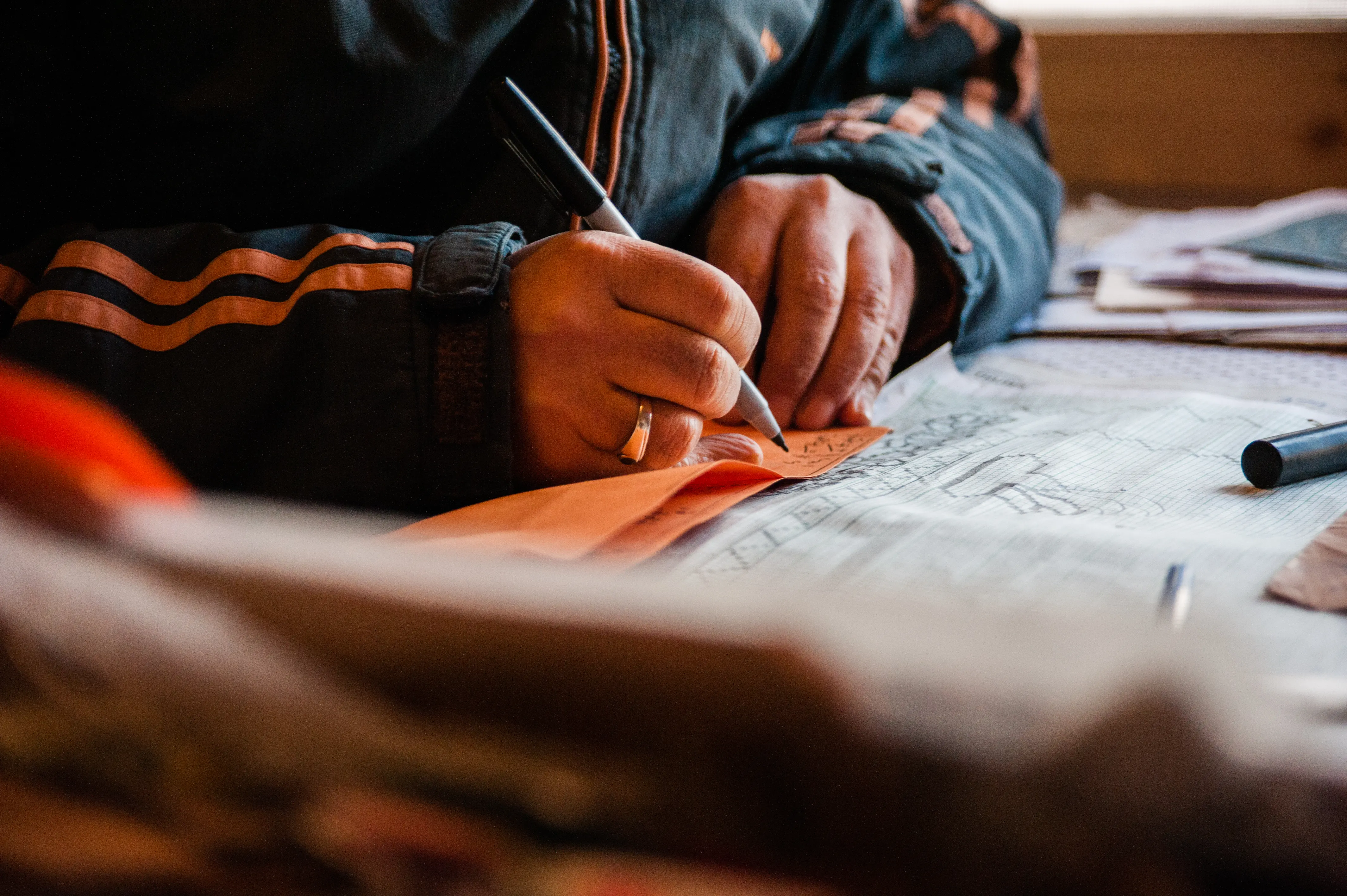
Design & Pattern
For patterned and jacquard pieces, the design is first recorded as a talim — a hand-marked chart the weaver reads stitch by stitch. Traditional motifs and contemporary briefs are set down the same way.
02
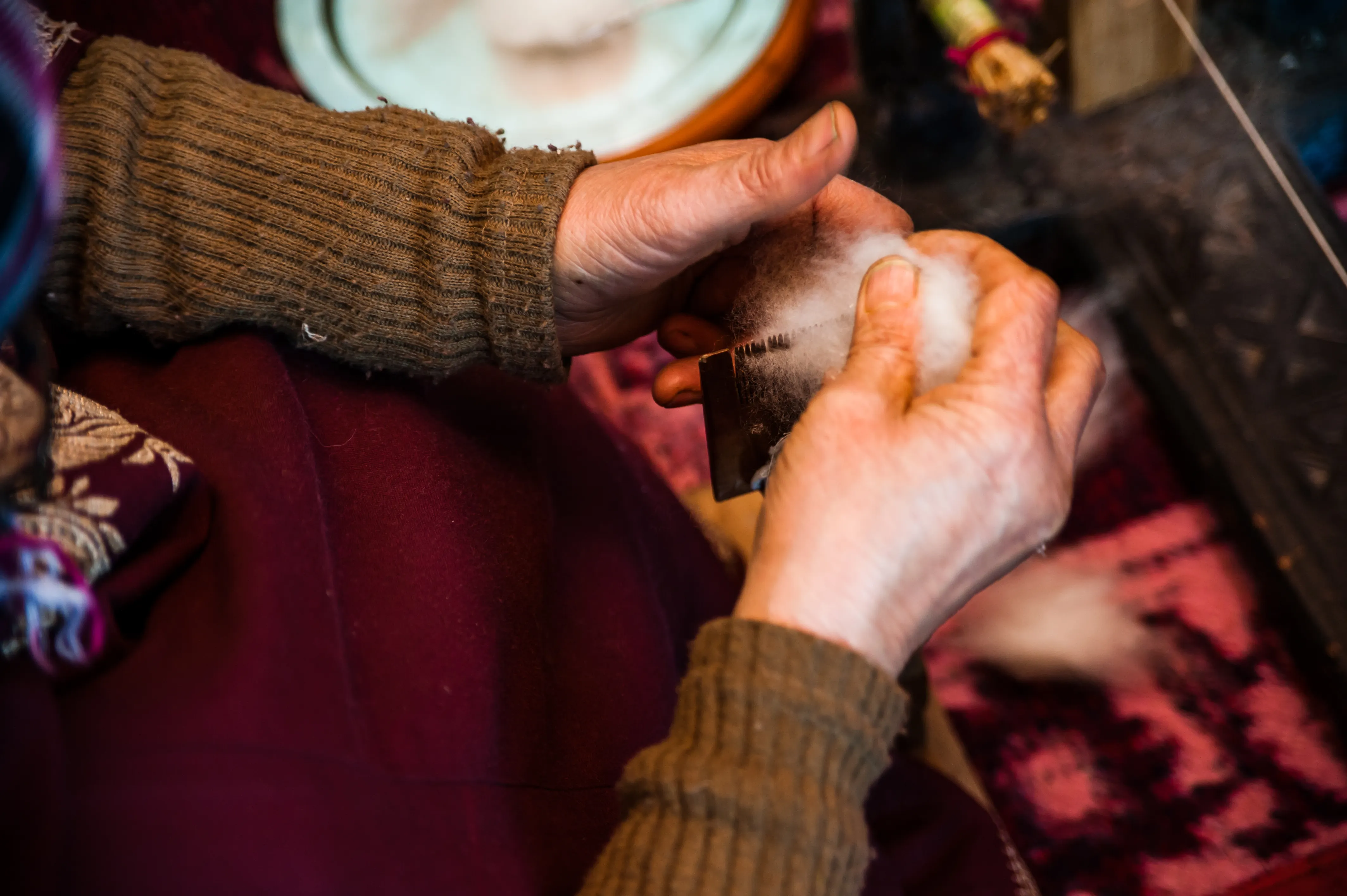
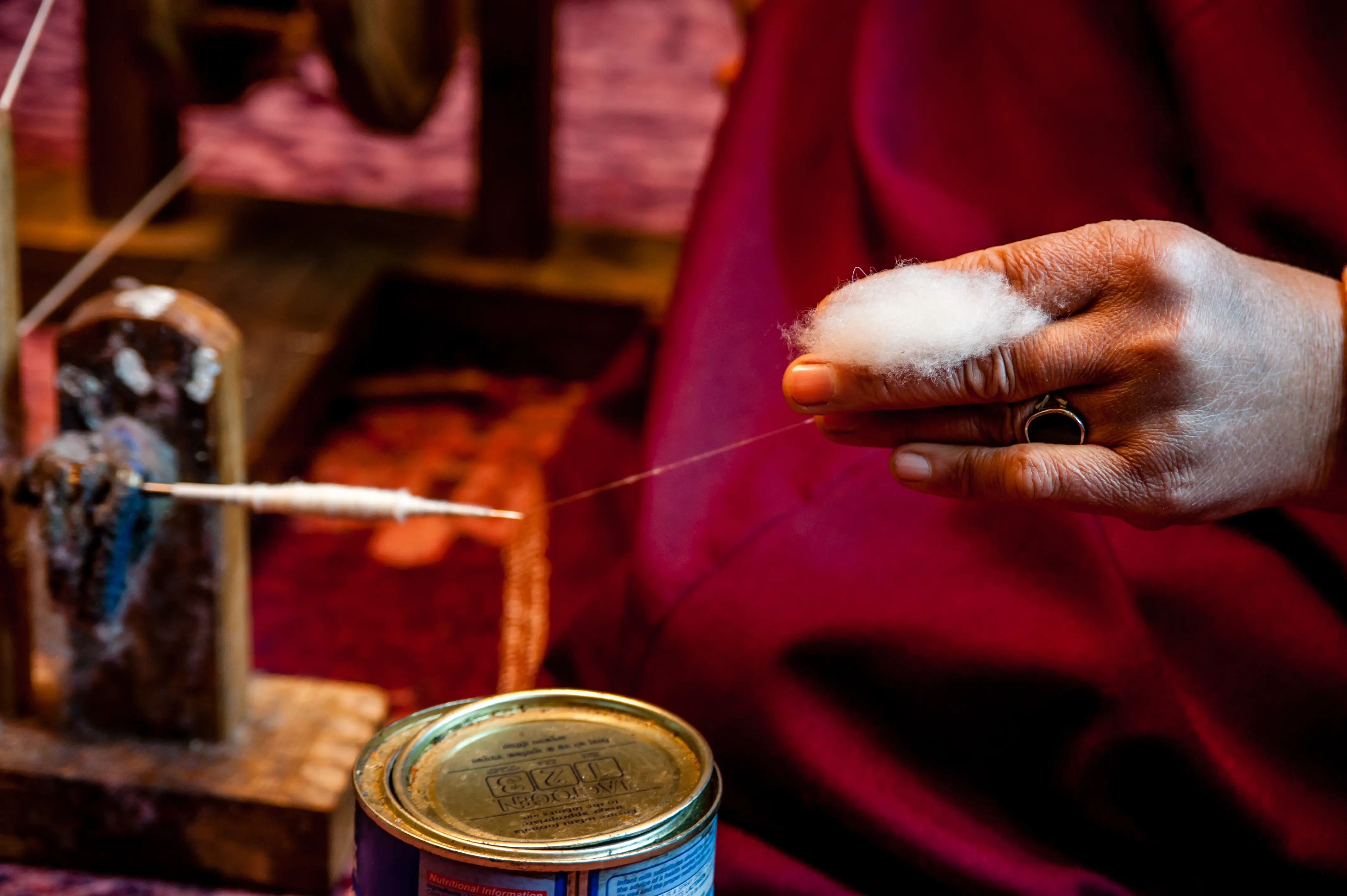
Card & Spin
Raw fibre is carded to align and clean it, then hand-spun into yarn on a traditional spindle. This stage alone can take a spinner years to master.
03
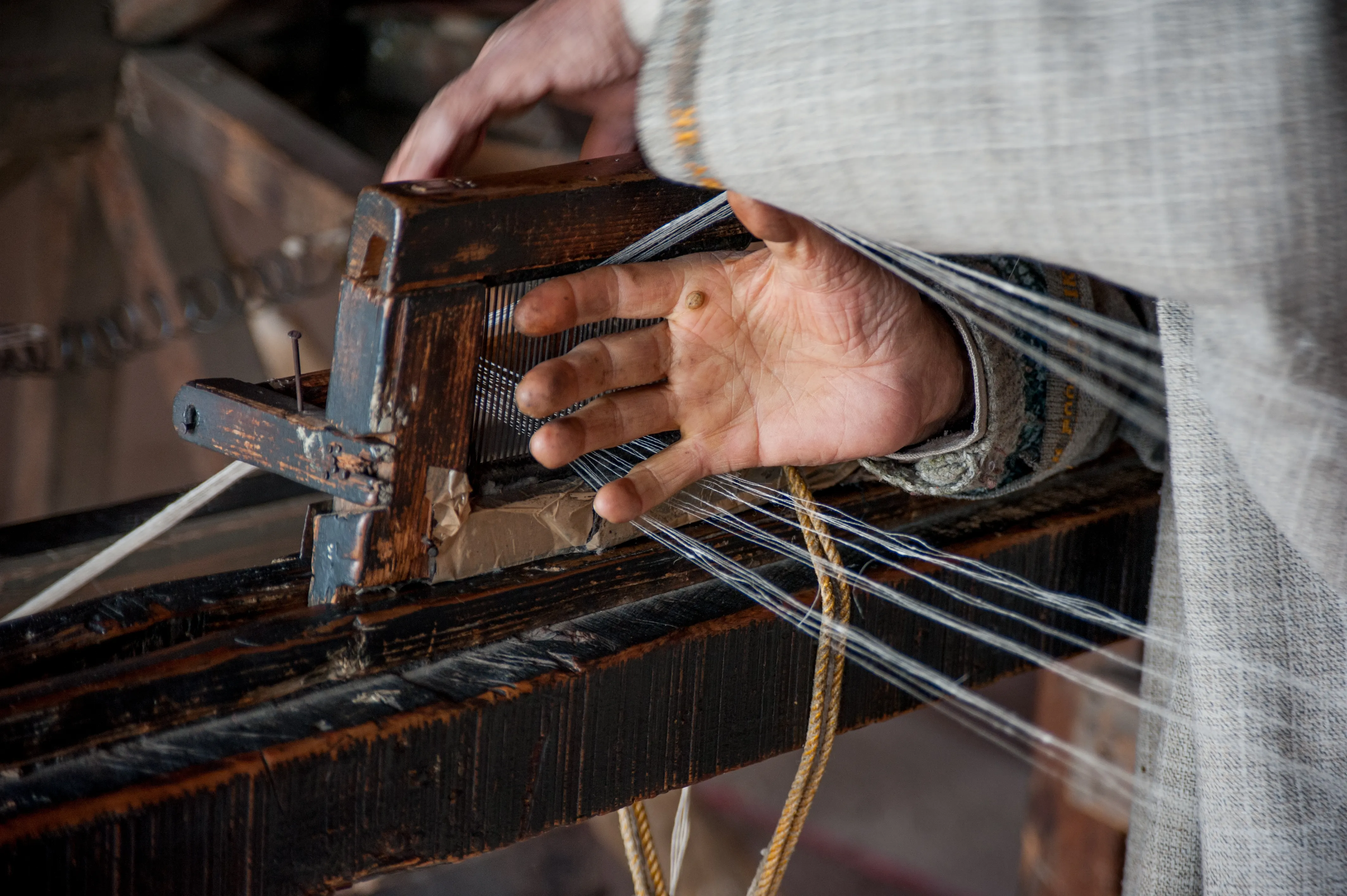
Warp & Weave
The loom is dressed — warp threads set and tensioned — before weaving begins. On a handloom, the weaver drives the shuttle and beats the weft by hand, row by row.
04
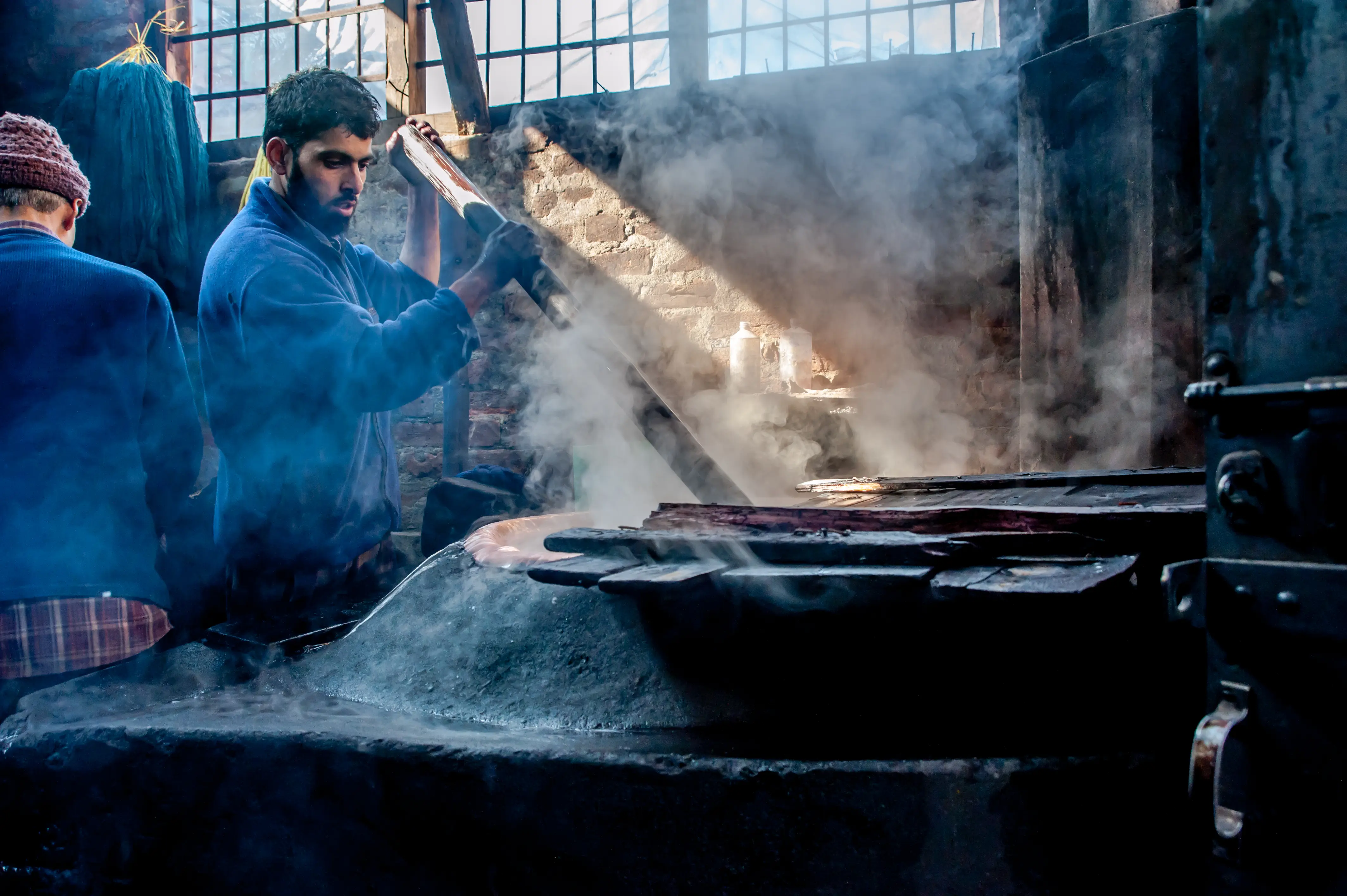
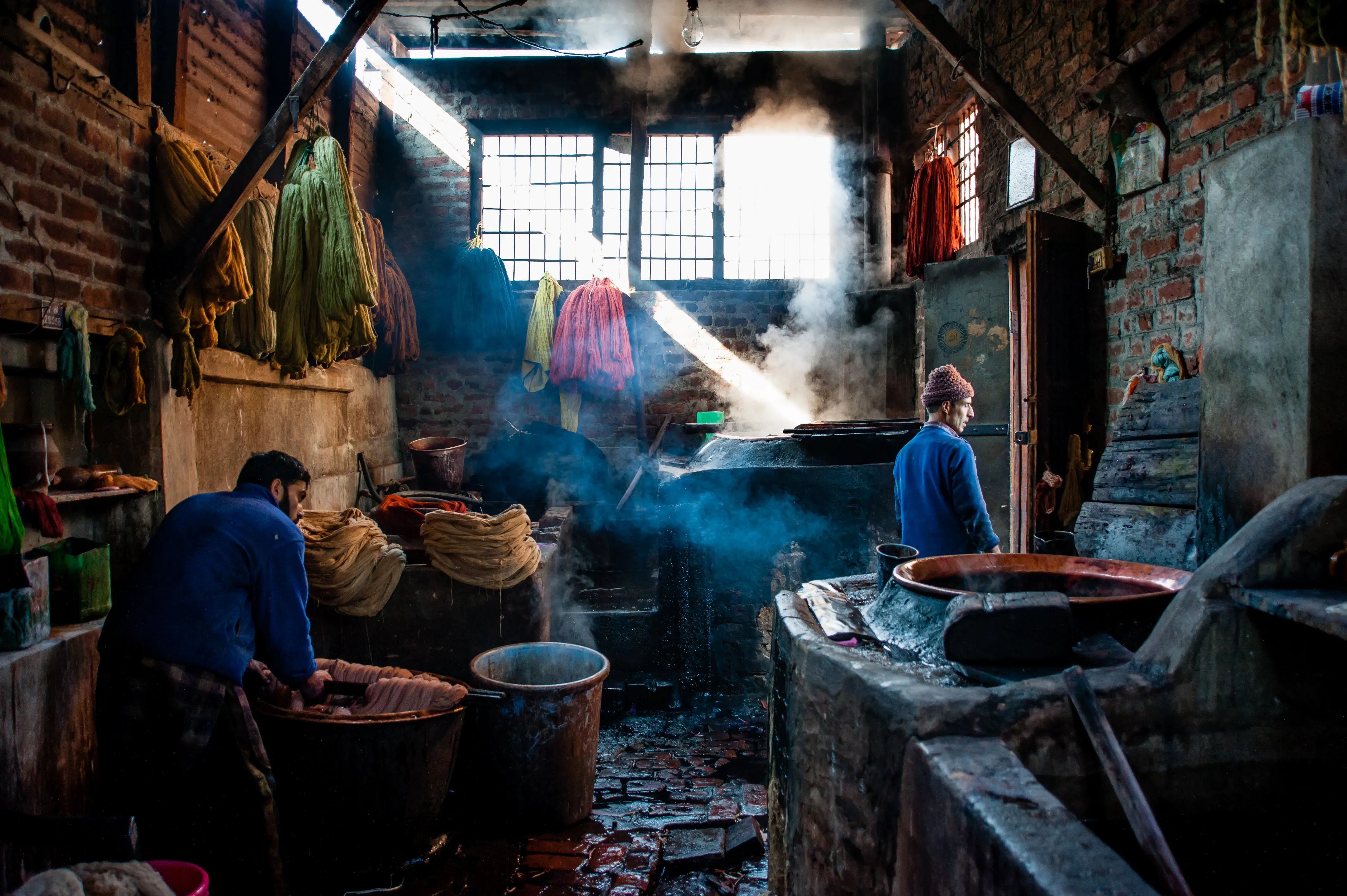
Dye
Yarn or woven cloth is dyed by hand over wood-fired vats, in small batches, colour matched by eye and experience rather than a fixed formula.
05
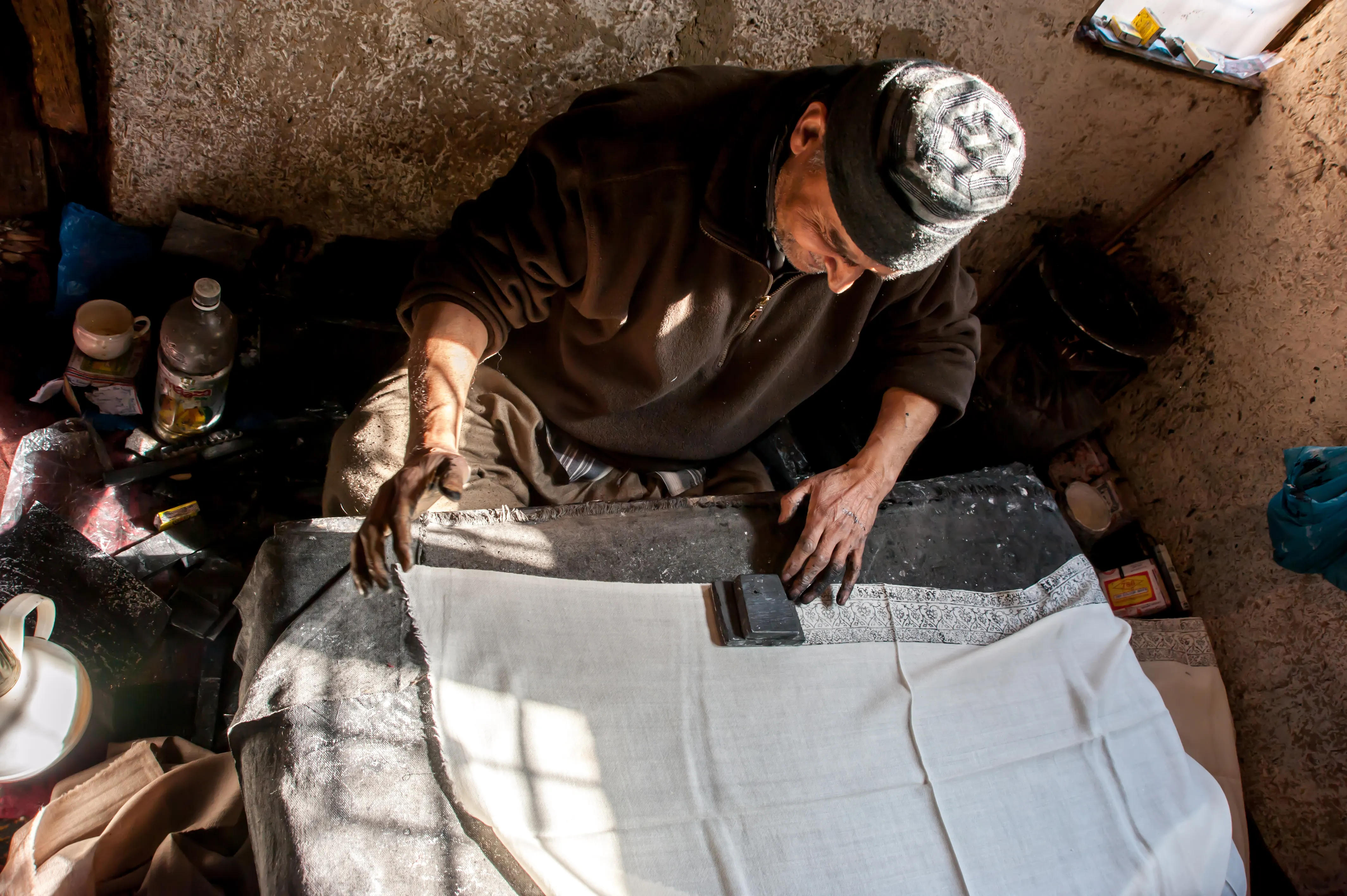
Embroider, Finish & Inspect
Embroidery and block-printing are done by specialists working on cloth that's already been spun and woven by someone else. The piece is then finished, cleaned and inspected before it moves to packing.
Handloom vs. power-loom
We tell you which is which.
Kashmiri craft is often sold under a single, generic 'handmade' label. We don't do that — the two production methods serve different products, and a buyer deciding what to specify should know exactly what they're getting.
Handloom
Fine Pashmina, shawls, stoles, carpets
Hand-spun where the product calls for it, woven by hand on treadle looms, embroidered by hand where specified. This is the traditional core of the workshop — more than eighty handlooms across our network, run by weavers who trained on them for years.
Power-loom
Contemporary apparel & selected prêt
For jackets, Bandi jackets, Pashmina jackets and other contemporary apparel, we use power-looms where they suit the product — cut, finished and quality-checked by hand. We'll always be specific about which parts of a product are power-loomed.
See what these processes produce.
From fine handwoven Pashmina to power-loomed apparel — browse what we make, or bring us something that isn't on the list yet.